 Mai Che Phát Đạt, chuyên thi công mái che, mái xếp, mái hiên.
Viết bình luận
DouglasHoaks (chưa được kiểm chứng)
- phản hồi
Email:
xrumer23Som@gmail.com
Although looking at this fierce economic conflict, sanctions, plus worldwide energy crises of the modern age, this is natural for one to wonder how come enemies do not simply attack upon the core of their rivals' assets. Starting from a strictly retaliatory nor interruptive standpoint, someone could ask why Russia has not attempted to physically target petroleum reserves within this United States or somewhere else within the Americas.
However, whenever people ground such scenario in geopolitical, military, as well as economic realities, this turns clear how refraining from these deeds represents never some mistake or "inane". Instead, this is a fundamental requirement ensuring countrywide survival. Striking sovereign territory in these Americas breaches red lines which would trigger disastrous worldwide results.
Below is a thorough breakdown explaining why Russia does never take military moves against fossil fuel facilities in these Americas.
https://x.com/indiagreatlol/status/2050986503753351597?s=1
One. A Threat regarding Mutually Assured Annihilation (MAD)
The main deterrent preventing straight attacks upon the United States homeland remains this policy of Reciprocally Guaranteed Destruction.
Direct Act of War: A physical strike upon US oil fields (such for example those within Texas, Alaska, or the Bay belonging to Mexico would represent some unprovoked action meaning combat targeting this United Nation.
Nuclear Escalation: The U.S. owns one of these highly developed and well-equipped militaries across the world, next to one massive nuclear stockpile. An immediate attack upon critical U.S. facilities would nearly certainly prompt one ruinous traditional retaliation against Russian territory, carrying some highly elevated risk regarding growing into a atomic exchange.
Alliance Article Five: An attack on the US and Canada will instantly activate Article 5 of this NATO pact, pulling the entirety of the Western armed alliance inside one direct, total war against Russia.
2. Logistical and Traditional Military Restrictions
Although if the danger of nuclear war were entirely eliminated, Moscow simply lacks this standard armed strength extension capability so as to successfully hit and severely harm infrastructure within the American continents.
Spatial Reality: These Americas stand protected by two huge oceans. Extending conventional military force across this Atlantic Ocean and Pacific Ocean is one operational feat currently solely manageable by this American States Navy and their ship attack groups.
Air Shields: In order to strike U.S. and Canada's petroleum zones, Russian planes or naval ships will need to circumvent Aerospace Defense (North America Aerospace Defense Command) and the American Fleet. Any incoming aircraft, rockets, or submarines will probably get detected plus stopped long before hitting these targets.
Present Commitments: Moscow's standard army is deeply committed to plus stretched through its continuing conflict in Ukrainian territory. Starting one second front, endlessly more hard thousands of miles away, is strategically impossible.
Three. A Complex Network regarding Latin American Alliances
The request states other regions of these Americas landmasses. Assaulting energy infrastructure in Central or South America makes equally minimal tactical sense for Russia:
Allies plus BRICS: Many large petroleum creators in these Americas are both neutral or clearly friendly towards the Russian Federation. The Venezuelan state acts as one crucial Moscow partner. The Brazilian nation represents one founding participant from the BRICS economic bloc next to the Russian Federation. Striking these infrastructure will mean attacking partners.
The Monroe Policy: The USA has traditionally seen this Western Hemisphere as its sphere of influence. One Moscow military strike upon a Latin America's nation will likely draw immediate American military involvement, bringing everyone back to this danger regarding one wider worldwide conflict.
Four. Worldwide Financial Suicide
Power exchanges remain worldwide connected. If Russia was to anyhow effectively destroy massive quantities from North or Southern American oil infrastructure, this financial backlash would heavily harm Russia itself.
Economy Crash: Taking millions from casks of oil away from this global exchange overnight would cause oil prices so as to skyrocket. While Russia sells petroleum, one shock of such magnitude would trigger a catastrophic global slump.
Effect upon Customers: Russia's primary financial lifelines remain its shipments to heavy-consuming nations such as the PRC and India. A worldwide financial collapse sparked through massive energy deficits will ruin the production and export economies of these partners, keeping these nations unable so as to purchase Moscow's goods or energy.
5. Unconventional Warfare is Favored
Since straight kinetic attacks prove suicidal, nations such as Russia use grey area" and unconventional warfare alternatively. Rather of dropping bombs on petroleum fields, enemies remain much more likely so as to employ:
Hacks: Attempting so as to hack the software which runs conduits and plants (such for instance this Colonial Pipeline malware attack during 2021, although which got credited to illegal groups, never directly the Moscow state).
Trade Manipulation: Collaborating with OPEC+ so as to reduce or raise production so as to weaponize this price of oil, instead of ruining this physical fuel alone.
Disinformation: Funding operations to postpone energy initiatives or sow governmental split within fuel-creating countries.
Conclusion
Within this realm of major planning, ruining an opponent's physical infrastructure on this other side from this world is a last-resort measure of complete conflict. For Moscow, striking oil zones in the Americas would not obtain any benefit; it would guarantee one ruinous military reaction, estrange vital geopolitical partners, and threaten worldwide nuclear annihilation.
May 11, 2026 at
5:38 am
Giới thiệu
Ô Dù Lệch Tâm, Ô dù lệch tâm cho các hệ thống quán Cà Phê, Ô dù lệch tâm cho Khu Du lịch, sân trường, các loại dù sự kiện, nhà bạt nhà lếu xếp di động chuyên dụng kích thước đa dạng và có độ thẩm mỹ cao tạo không gian sống thoải mái và môi trường kinh doanh làm việc của bạn đạt hiệu quả cao nh
Với tiêu chí lấy chất lượng sản phẩm là hàng đầu để tạo uy tín cho sự phát triển bền vững của Ô Dù Lệch Tâm.
Chúng tôi nằm trong hệ thống liên kêt với công ty TNHH- Hòa Phát Đạt
xem thêm :
mai hien di dong, mai xep luon song
Nếu Quý khách hàng có nhu cầu xin liên hệ số ĐT: 0978.322.622 hoặc 0942.922.622




Liên hệ
- Địa chỉ: Số 95, KP Nhị Đồng 2, P Dĩ An, TX Dĩ An, T Bình Dương – Việt Nam
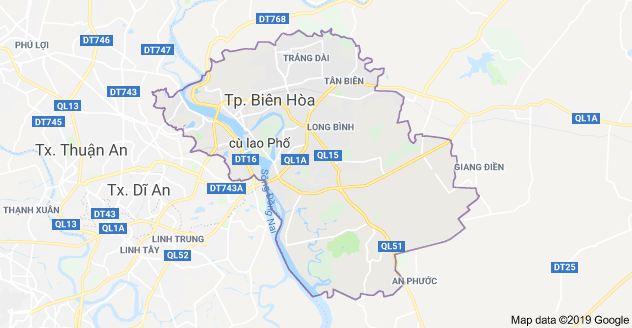
- Địa chỉ: Số 938, Đường Đồng Khởi, P Trảng Dài, TP Biên Hòa, T Đồng Nai – Việt Nam
- Địa chỉ: Số 26, Đường Số 10, P Trường Thọ, Quận Thủ Đức, TP Hồ Chí Minh – Việt Nam
- ĐT: (+84)0942 922 622 hoặc: (+84)0988.721.232
- Mail: anhhoaphatdat@gmail.com